
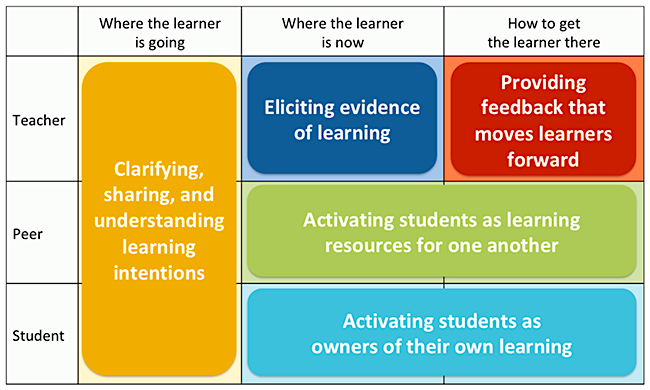
Effective teaching involves more than explaining a lesson and checking students’ final scores. Teachers also need to understand what students are learning while instruction is taking place. Are they following the explanation? Can they apply a new concept independently? Which misunderstandings need attention before the class moves forward?
Formative assessment techniques help teachers answer these questions throughout the learning process. By gathering evidence of student understanding during lessons, educators can identify learning gaps, provide useful feedback, and adjust their teaching before small misunderstandings become larger obstacles.
Unlike assessments designed primarily to assign grades, formative assessment focuses on improving learning. It can involve a quick question, a short written response, a classroom discussion, a peer review, or a carefully designed exit ticket. The value comes not from the activity alone but from how teachers and students use the information it reveals.
This guide explains the importance of formative assessment, presents 15 practical techniques for different classroom situations, and shows how teachers can use assessment evidence to make informed instructional decisions.
What Is Formative Assessment?
Formative assessment is an ongoing process in which teachers and students gather and interpret evidence of learning and use it to decide what should happen next.
For example, a teacher explaining fractions might ask students to solve a short problem halfway through the lesson. If several students add the numerators and denominators incorrectly, the teacher can pause, demonstrate the concept using visual models, and provide another opportunity to practise.
In this example, the assessment is formative because the evidence directly influences the next teaching step.
Formative assessment can take place before, during, or after a lesson. It can be informal, such as listening to a student’s explanation, or more structured, such as using a short quiz to identify specific misconceptions.
The explains how classroom assessment can reveal students’ thinking and help teachers adapt instruction, provide feedback, and support progress toward learning goals.
Formative Assessment vs. Summative Assessment
Although both types of assessment are important, they serve different purposes.
| Feature | Formative assessment | Summative assessment |
|---|---|---|
| Main purpose | Improve learning during instruction | Evaluate learning after a period of instruction |
| Timing | Throughout the learning process | Often at the end of a unit, term, or course |
| Typical examples | Questioning, exit tickets, draft feedback, practice quizzes | Final exams, end-of-unit tests, final projects |
| Use of results | Adjust teaching and identify next steps | Report achievement or evaluate learning outcomes |
| Student role | Reflect, practise, and respond to feedback | Demonstrate learning against assessment criteria |
The same assessment method can serve either purpose. A quiz, for example, can be formative if the teacher uses the answers to identify misconceptions and reteach a concept. If the quiz is used only to assign a final grade, it is functioning more like a summative assessment.
The key difference is how the evidence is used, not simply the format of the assessment.
Why Are Formative Assessment Techniques Important?
Formative assessment provides teachers with a clearer picture of students’ understanding while there is still time to respond. When used consistently, it can help educators make better decisions about instruction and give students a more active role in their learning.
1. Identifies learning gaps early
Students may appear attentive without fully understanding a concept. A short assessment can reveal misconceptions that might otherwise remain unnoticed until a major test.
For example, students may correctly memorize a mathematical formula but struggle to explain when to use it. A follow-up question asking them to justify their method can reveal whether they understand the underlying concept.
2. Supports timely, targeted feedback
Feedback is most useful when students understand what they did well, what needs improvement, and what action they can take next.
Instead of writing “Good job” or “Try harder,” a teacher might explain, “Your paragraph includes relevant evidence. Now explain how that evidence supports your main argument.”
Specific guidance makes the next step clearer and gives students an opportunity to improve their work.
3. Helps teachers adjust instruction
Assessment evidence can help teachers decide whether to continue, revisit a concept, provide a different explanation, or offer additional practice.
If most students misunderstand a key idea, the teacher may need to reteach it to the whole class. If only a small group needs support, a short targeted activity may be more appropriate.
4. Encourages student participation
When students are regularly asked to explain their thinking, evaluate their progress, and ask questions, they become active participants in the learning process.
Self-assessment and peer feedback can also help students recognize that learning involves revision, reflection, and practice.
5. Makes teaching more responsive
A lesson plan provides direction, but students’ needs may change as instruction unfolds. Formative assessment allows teachers to respond to what students actually understand rather than relying entirely on assumptions.
The describes assessment as an ongoing cycle of setting learning goals, diagnosing student understanding, providing feedback, and adapting instruction.
15 Effective Formative Assessment Techniques Every Teacher Should Know
Teachers do not need to use every technique in every lesson. The most effective approach is to select methods that match the learning objective, the age of the students, and the kind of evidence needed.
1. Exit Tickets
Best for: Checking understanding at the end of a lesson.
An exit ticket is a short question or task students complete before leaving class. It gives teachers a quick indication of what students understood and what may need further attention.
How to use it:
- Identify the most important concept from the lesson.
- Prepare one to three short questions.
- Ask students to respond independently.
- Review their answers to identify patterns.
- Use the results to plan the next lesson.
For a science lesson about ecosystems, an exit ticket might ask students to explain one way a change in a population can affect other organisms.
For a mathematics lesson, students might solve one problem and explain why they selected a particular method.
Teacher tip: Avoid asking too many questions. A small number of well-designed prompts can provide more useful information than a long worksheet that takes considerable time to review.
2. Thumbs Up, Thumbs Sideways, Thumbs Down
Best for: Quick checks during instruction.
This simple technique allows students to communicate how confident they feel about a concept.
- Thumbs up: “I understand and can explain it.”
- Thumbs sideways: “I understand some of it but need more practice.”
- Thumbs down: “I am confused and need help.”
Teachers can pause during a lesson and ask students to indicate their understanding.
The responses provide a quick signal, but they should not be treated as proof of mastery. Some students may overestimate their understanding, while others may hesitate to show uncertainty in front of classmates.
Follow up with a short question or task that lets students demonstrate what they know.
3. Think-Pair-Share
Best for: Checking reasoning and encouraging participation.
Think-Pair-Share gives students time to formulate an answer before discussing it with a partner.
How it works:
- Ask a question related to the learning objective.
- Give students quiet time to think independently.
- Invite them to discuss their ideas with a partner.
- Ask selected pairs to share their reasoning.
- Use the responses to identify misconceptions or extend the discussion.
For example, after reading a passage, students might explain which evidence best supports the author’s main argument.
This technique can reveal more student thinking than asking for immediate volunteers, because every student has an opportunity to consider an answer.
4. Strategic Questioning
Best for: Assessing understanding during a lesson.
Questions are among the most flexible formative assessment tools available to teachers. However, questions should reveal how students are thinking, not simply whether they can repeat a fact.
Use a combination of prompts:
- What do you notice?
- How did you reach that answer?
- Why does this method work?
- Can you explain the idea in another way?
- What evidence supports your conclusion?
- What might happen if one condition changed?
For example, instead of asking only for the answer to a mathematics problem, ask students to explain the steps they used.
Wait a few seconds after asking a question so students have time to think. Invite responses from a range of learners and provide opportunities for students to write their answers before sharing them aloud.
5. Mini Whiteboards
Best for: Whole-class checks in mathematics, science, languages, and other subjects.
Give each student a small whiteboard or reusable response surface. Ask a question and have everyone write an answer before displaying it.
The teacher can quickly scan responses to see whether students understand the concept.
For example, students might simplify an expression, identify a grammatical error, label a diagram, or select the correct next step in a process.
Mini whiteboards help reduce the problem of relying on a few confident students to represent the entire class.
If whiteboards are unavailable, students can write answers on paper or use another accessible response method.
6. Low-Stakes Practice Quizzes
Best for: Checking recall and identifying misconceptions.
Short quizzes can help teachers assess whether students remember important concepts and can apply them to a new question.
A quiz might include multiple-choice questions, short responses, matching tasks, or one problem requiring students to explain their reasoning.
For formative purposes, keep the emphasis on learning rather than punishment. Students should have a chance to review mistakes, receive feedback, and practise again.
Teachers can also use the same concept in a slightly different question to check whether students can apply what they have learned instead of simply remembering a previous answer.
7. One-Minute Papers
Best for: Encouraging reflection and identifying unclear concepts.
At the end of a lesson, ask students to spend one minute answering a prompt such as:
- What is the most important idea you learned today?
- Which part of the lesson is still unclear?
- How would you explain this concept to a younger student?
- What question would you like answered next?
The short responses can reveal what students consider important and which areas need clarification.
Teachers should look for recurring themes rather than attempting to provide detailed written feedback on every response. If many students identify the same difficulty, the next lesson can address it directly.
8. Misconception Checks
Best for: Detecting common errors in understanding.
A misconception check presents a common incorrect statement or solution and asks students to evaluate it.
For example, in mathematics, a teacher might display an incorrect solution to a fraction problem and ask students to identify the first incorrect step.
In science, students might examine a statement that reflects a common misunderstanding about forces or energy.
Ask students to explain why the answer is correct or incorrect. This is important because selecting the right option by guessing does not necessarily demonstrate understanding.
Misconception checks are especially useful when students can memorize procedures without understanding why those procedures work.
9. Concept Maps
Best for: Checking connections between ideas.
A concept map is a visual representation of concepts and the relationships between them. Students write key terms and connect them using lines, arrows, or explanatory phrases.
For example, a concept map about ecosystems might connect producers, consumers, decomposers, energy, and food webs.
Teachers can use concept maps before instruction to identify prior knowledge and afterward to see whether students have developed more accurate connections.
Look for missing concepts, incorrect relationships, and ideas that remain disconnected. These patterns can reveal what needs further explanation.
10. Peer Assessment
Best for: Developing feedback skills and clarifying success criteria.
Peer assessment allows students to review one another’s work using clear, teacher-provided criteria.
For example, students writing persuasive paragraphs might check whether each paragraph includes a clear claim, relevant evidence, and an explanation connecting the evidence to the claim.
A simple process:
- Explain the success criteria.
- Model an example of useful feedback.
- Ask students to review a partner’s work.
- Require feedback to identify a strength and a specific next step.
- Give students time to revise their work.
Peer assessment should be structured and respectful. Students need guidance on evaluating the work rather than criticizing the person who produced it.
Teachers remain responsible for monitoring the quality of feedback and correcting misunderstandings.
11. Self-Assessment Checklists
Best for: Building student independence and reflection.
A self-assessment checklist helps students compare their work with the learning objective or success criteria.
For a written assignment, the checklist might ask:
- Have I answered the question?
- Have I organized my ideas clearly?
- Have I included relevant evidence?
- Have I checked my spelling and punctuation?
- Have I explained my reasoning?
For a science investigation, it might focus on identifying variables, recording observations, and drawing a conclusion supported by evidence.
Introduce the checklist before students begin the task so they understand what successful work involves.
Self-assessment does not replace teacher judgment. It gives students a structured opportunity to evaluate their work and identify areas for improvement.
12. Traffic-Light Assessment
Best for: Monitoring progress through a multi-step task.
Students use green, yellow, and red indicators to communicate how they are progressing.
- Green: I can continue independently.
- Yellow: I have a question or need some guidance.
- Red: I am stuck and need support.
The system can help teachers identify who may need assistance during independent work.
To make the technique more informative, ask students to explain what is difficult or demonstrate the step where they became stuck. The colour is a starting signal, not a complete diagnosis of their understanding.
13. Digital Polls and Quick Response Questions
Best for: Large classes and lessons using technology.
Digital polls can gather responses from many students in a short period. Teachers can use them for multiple-choice questions, predictions, confidence checks, and brief comprehension tasks.
For example, after explaining a historical event, the teacher might ask students to identify which factor contributed most directly to a particular outcome.
The results can reveal whether students agree, misunderstand the question, or need further explanation.
Digital tools are optional. Teachers should consider student access, privacy, accessibility, and the time needed to manage technology. Paper-based response cards can provide similar benefits.
14. Annotating a Text or Worked Example
Best for: Reading comprehension, mathematics, and analytical subjects.
Ask students to mark up a text, diagram, or worked example to show how they understand it.
In reading, students might underline the main claim, highlight evidence, and write a question in the margin.
In mathematics, students might label each step of a solution and explain why a particular operation was used.
The annotations make students’ reasoning visible and help teachers identify whether they understand the structure of the material.
Provide clear annotation instructions so the task focuses on meaningful thinking rather than excessive highlighting.
15. Student Conferences and Individual Check-Ins
Best for: Understanding individual learning needs.
A short conversation with a student can reveal difficulties that may not be obvious from written answers.
During a check-in, the teacher might ask the student to explain a method, describe what they find challenging, or identify what they plan to try next.
For example, a student may complete a reading question incorrectly because they misunderstood a key vocabulary term. Another may understand the content but struggle to organize a written response.
Brief conferences allow teachers to give targeted guidance and help students set realistic next steps.
In larger classes, teachers can rotate check-ins across several lessons or use small-group conversations to manage time effectively.
How to Choose the Right Formative Assessment Technique
The most useful technique depends on the information the teacher needs.
| Teaching goal | Suitable techniques |
|---|---|
| Check understanding quickly | Thumbs signals, mini whiteboards, digital polls |
| Identify misconceptions | Misconception checks, strategic questioning, practice quizzes |
| Assess reasoning | Think-Pair-Share, worked-example annotation, written explanations |
| Check reading comprehension | Exit tickets, one-minute papers, text annotation |
| Develop student independence | Self-assessment checklists, reflection prompts |
| Improve written work | Peer assessment, student conferences, draft feedback |
| Monitor progress during a task | Traffic-light assessment, observation, individual check-ins |
| Identify connections between ideas | Concept maps, explanatory questions |
Teachers should select methods that provide evidence relevant to the learning objective. A confidence signal may be useful for deciding where to pause, but it may not be enough to determine whether a student can solve a complex problem independently.
Combining a quick check with a brief explanation or demonstration often gives teachers a more accurate picture.
How to Use Formative Assessment Results to Improve Teaching
Collecting answers is only the beginning. Formative assessment becomes useful when teachers interpret the evidence and decide what to do next.
Step 1: Identify the learning objective
Before choosing an assessment, decide what students should know or be able to do by the end of the lesson.
A clear objective makes it easier to create questions that reveal whether students are progressing toward the intended outcome.
Step 2: Gather evidence from different students
Avoid relying only on volunteers or students who finish first. Use methods that allow the whole class to respond, such as mini whiteboards, written explanations, or short individual tasks.
This helps teachers see a broader range of understanding.
Step 3: Look for patterns in the responses
Group responses into useful categories. For example:
- Students who demonstrate the intended understanding
- Students who make a similar conceptual error
- Students who understand part of the process
- Students who need additional explanation or practice
The categories should reflect the learning objective rather than labels about students’ abilities.
Step 4: Decide on the next instructional step
Use the evidence to choose an appropriate response.
If most students understand the concept, the teacher may move forward with an application task. If many students share a misconception, a whole-class explanation or alternative example may be necessary. If a small group needs help, targeted instruction may be more efficient.
Step 5: Give actionable feedback
Feedback should identify what the student is doing successfully, what needs improvement, and how to make progress.
For example:
Instead of: “Your answer is wrong.”
Try: “You selected the correct formula. Review how you substituted the values, then check the units in your final answer.”
The second response provides a specific action the student can take.
Step 6: Give students time to act on the feedback
Students need an opportunity to revise their work, answer a similar question, or explain the concept again.
Without this step, feedback may be received but not used.
Step 7: Check whether the next step worked
After reteaching or providing feedback, gather new evidence. A short follow-up question can show whether students have corrected the misunderstanding or need further support.
This creates a continuous cycle of assessment, feedback, action, and review.
For additional guidance, the Education Endowment Foundation’s guidance on teacher feedback emphasizes the importance of high-quality instruction, effective formative assessment, and feedback that helps students make progress.
Examples of Formative Assessment Across Different Subjects
Formative assessment can be adapted to almost any subject. The most important consideration is whether the method reveals the thinking or skills relevant to the lesson.
Mathematics
Ask students to solve a problem and explain the steps they used. A mini-whiteboard check can reveal errors, while a misconception question can show whether students understand why a method works.
English and language arts
Use short written responses, paragraph annotations, vocabulary checks, and peer review. Ask students to identify evidence from a text and explain how it supports an interpretation.
Science
Ask students to predict an outcome before an experiment, record observations, and explain whether the evidence supports their prediction. Concept maps can help teachers check connections between scientific ideas.
Social studies
Use source analysis, short explanations, timeline activities, and classroom discussions. Ask students to support claims with evidence and distinguish between a source’s information and their own interpretation.
Foreign languages
Use quick vocabulary checks, short dialogues, listening responses, and sentence completion tasks. Teachers can identify whether students need more practice with vocabulary, grammar, pronunciation, or comprehension.
Art and practical subjects
Observe students during the creation process, ask them to explain design decisions, and use checklists related to the task’s criteria. Feedback can help students revise a technique or improve a draft before producing a final piece.
Common Mistakes to Avoid in Formative Assessment
Even a well-designed assessment may provide limited value if teachers do not use the results effectively. Avoid these common mistakes.
Using too many assessment activities
Frequent checks are helpful only when they provide useful evidence. Too many questions, forms, and digital tools can interrupt learning and increase workload.
Choose a small number of techniques that align with the lesson objective.
Asking questions that are too easy
If a question only asks students to repeat a phrase, it may not reveal whether they can apply the concept.
Use a mixture of recall, explanation, reasoning, and application questions appropriate to the learning goal.
Relying only on confident students
When teachers hear from only a few volunteers, they may overlook misunderstandings among quieter students.
Use whole-class response methods and independent written answers to gather more representative evidence.
Giving vague feedback
Comments such as “Good work” or “Needs improvement” may not tell students what to do next.
Be specific about the skill or idea that needs attention and provide a manageable next step.
Treating every formative check as a graded test
If every practice response affects a student’s grade, students may become more focused on avoiding mistakes than learning from them.
Where appropriate, allow low-stakes practice and revision so students can use feedback constructively.
Collecting evidence without adjusting instruction
A completed exit ticket or quiz is not automatically formative. If the results never influence teaching or student action, the activity has limited formative value.
Plan how you will review the evidence before introducing the assessment.
Ignoring accessibility and student needs
Some students may need extra processing time, accessible formats, language support, or alternative ways to demonstrate understanding.
Teachers should ensure that assessment methods measure the intended learning rather than unrelated barriers.
Frequently Asked Questions About Formative Assessment Techniques
1. What are the most effective formative assessment techniques?
Useful techniques include exit tickets, strategic questioning, Think-Pair-Share, mini whiteboards, practice quizzes, concept maps, peer assessment, self-assessment checklists, and student conferences. The most effective choice depends on the learning objective and how the results will be used.
2. How often should teachers use formative assessment?
Formative assessment can be integrated throughout lessons whenever teachers need evidence of student understanding. Some checks take only seconds, while others require a longer task or discussion. There is no universal number that every teacher must follow.
3. Are formative assessments graded?
They do not need to be graded. Many formative checks are most useful as low-stakes opportunities to identify misunderstandings and improve work. Schools may have different assessment policies, but the central purpose remains to guide learning and teaching.
4. What is the difference between formative and summative assessment?
Formative assessment is used to guide learning and adjust instruction while learning is taking place. Summative assessment is generally used to evaluate achievement after a period of learning. The same task can serve either purpose depending on how its results are used.
5. How can formative assessment help struggling students?
It can reveal the specific point at which a student is having difficulty. Teachers can then provide targeted explanations, additional practice, accessible materials, or small-group instruction rather than assuming that every student needs the same support.
6. Can formative assessment be used in large classrooms?
Yes. Techniques such as mini whiteboards, exit tickets, response cards, short quizzes, and structured peer discussions can help teachers gather evidence from many students. Teachers can review responses for common patterns and provide targeted follow-up where needed.
7. What role does feedback play in formative assessment?
Feedback helps students understand their current performance and identify what to do next. For feedback to be useful, students need time and support to act on it. Teachers should then check whether the feedback has helped students improve their understanding.
8. Can digital tools improve formative assessment?
Digital polls, online quizzes, and classroom response systems can make it easier to collect and review answers quickly. However, technology is not required. Paper-based responses, oral questions, observation, and short discussions can provide equally useful evidence when used appropriately.
Conclusion
Formative assessment techniques help teachers understand student learning while there is still time to make a difference. Through exit tickets, questioning, peer assessment, self-reflection, practice quizzes, and other classroom checks, educators can identify misconceptions, provide meaningful feedback, and adapt instruction to meet students’ needs.
The strongest approach is not to use every available technique. It is to select methods that match the learning objective, gather evidence from a broad range of students, and use the findings to decide what should happen next.
When formative assessment becomes a regular part of teaching, students gain more opportunities to understand their progress, act on feedback, and improve their work. Teachers, in turn, can make better-informed decisions and create a classroom environment in which assessment supports learning rather than simply measuring it.
