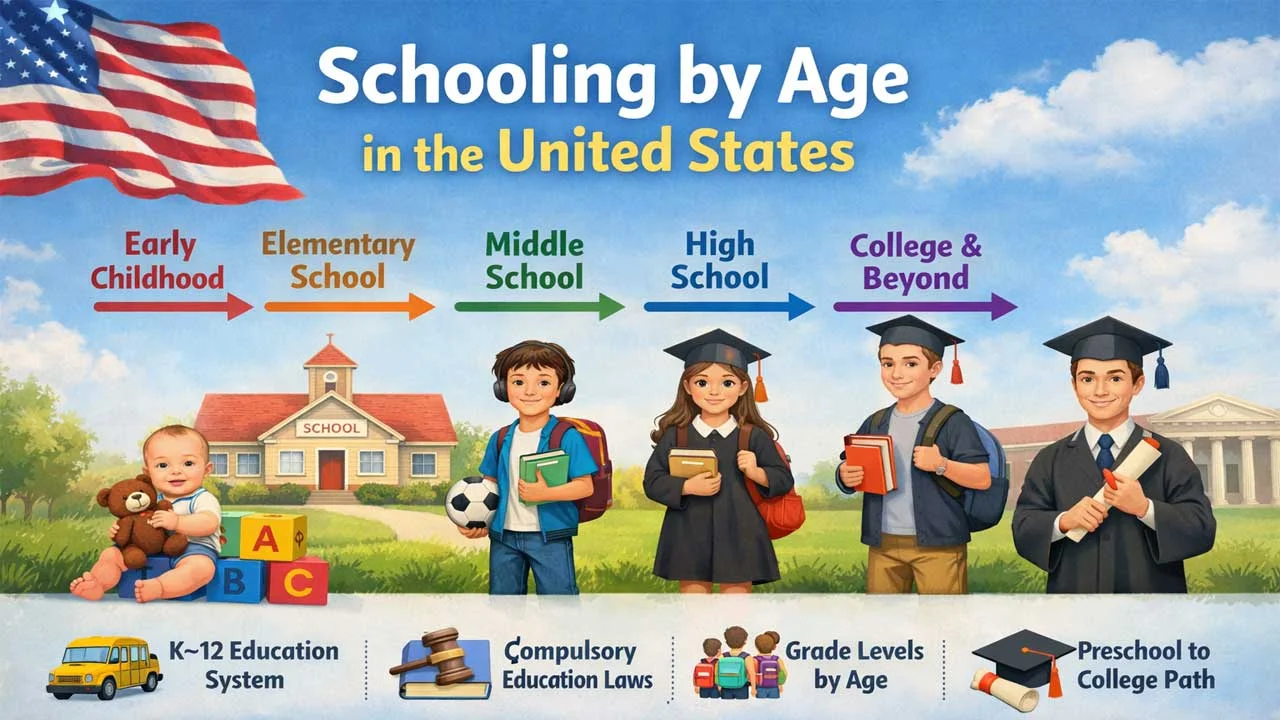
The United States has a broad and flexible education system that serves students from early childhood through higher education. Schools and universities across the country offer a wide variety of academic programs, allowing students to choose educational paths based on their interests, abilities, and future goals.
For students planning to study in the U.S., understanding the different levels of education and how they connect can make the process much easier.
How Education Is Organized in the U.S.
American education is generally divided into several stages. These include early childhood education, elementary school, middle school, high school, and higher education.
The number of years spent at each level can vary slightly depending on the state or school district. However, students typically progress through grades from kindergarten to grade 12 before entering college or another form of postsecondary education.
Elementary Education
Elementary school provides students with the basic academic skills they need for later education. Children usually learn reading, writing, mathematics, science, and social studies.
Schools may also provide classes in art, music, physical education, computer skills, and other areas.
Teachers at this level often focus on developing both academic knowledge and essential skills such as communication, cooperation, and independent learning.
Secondary Education
Secondary education generally consists of middle school and high school.
During middle school, students begin studying individual subjects in greater depth. They may have separate teachers for mathematics, science, English, history, and other subjects.
High school provides a broader selection of courses. Students complete required subjects while often having the opportunity to select electives based on their interests.
Some high schools offer specialized programs in areas such as technology, healthcare, business, engineering, arts, and vocational education.
Earning a High School Diploma
Students who successfully complete the required high school coursework generally receive a high school diploma. Graduation requirements are determined largely by states and school districts.
A diploma can allow students to enter the workforce, attend a community college, apply to a four-year college, or pursue technical and vocational education.
Students planning to attend university should also pay attention to course requirements because individual colleges may expect applicants to have completed specific subjects.
Colleges and Universities
Higher education in the United States includes many types of institutions.
Community colleges typically offer two-year associate degree programs and certificate programs. They can be a practical option for students seeking career training or planning to transfer to a four-year institution.
Four-year colleges and universities offer bachelor’s degree programs. Students normally select a major area of study, such as economics, biology, computer science, psychology, engineering, or communications.
Universities may also offer master’s and doctoral programs for students who want to continue their education after completing a bachelor’s degree.
Choosing a College
Students have many factors to consider when selecting a college or university. Academic programs are often one of the most important considerations, but other factors can also affect the decision.
Students may compare:
- Tuition and other expenses
- Available degree programs
- Campus location
- Housing options
- Class sizes
- Scholarships and financial aid
- Internship opportunities
- Student services
- Research facilities
- Career resources
There is no single type of institution that is appropriate for every student. The right choice depends on individual academic and financial circumstances.
Financial Support for Students
The cost of education can be an important consideration in the United States. Students may use several forms of financial support, including scholarships, grants, loans, work-study programs, and institutional financial aid.
Scholarships may be awarded based on academic achievement, athletic ability, specific talents, financial circumstances, or other criteria.
International students should check each institution’s financial-aid policies because eligibility can differ significantly between schools.
Studying in the U.S. as an International Student
The United States attracts students from many countries because of its large selection of academic programs and institutions.
International applicants generally need to meet the admission requirements of the institution they wish to attend. Depending on the school and program, this may include academic transcripts, proof of English proficiency, standardized test results, recommendation letters, essays, and financial documentation.
Students should begin researching requirements well before application deadlines.
Online and Alternative Education
Education in the United States is not limited to traditional classrooms. Many schools and universities offer online courses and degree programs.
Online education can provide flexibility for students who need to balance education with work or other responsibilities. Some institutions also offer hybrid programs that combine online learning with in-person classes.
Vocational schools, technical colleges, professional training programs, and adult education centers provide additional alternatives for learners with specific career goals.
Why Planning Matters
Because education policies and requirements can vary between states and institutions, students should research their specific educational pathway carefully.
Before applying to a school or university, it is useful to review admission requirements, program details, tuition costs, deadlines, financial-aid opportunities, and available student services.
International students should also consider visa requirements and living expenses when creating an education plan.
Conclusion
The U.S. education system provides students with many routes from primary education to advanced degrees and professional training. Its wide variety of schools, programs, and learning options allows students to build an educational pathway that matches their interests and career plans.
Whether a student is beginning elementary school, preparing for university, or considering graduate study, understanding how the system works is an important first step toward making informed educational decisions.