
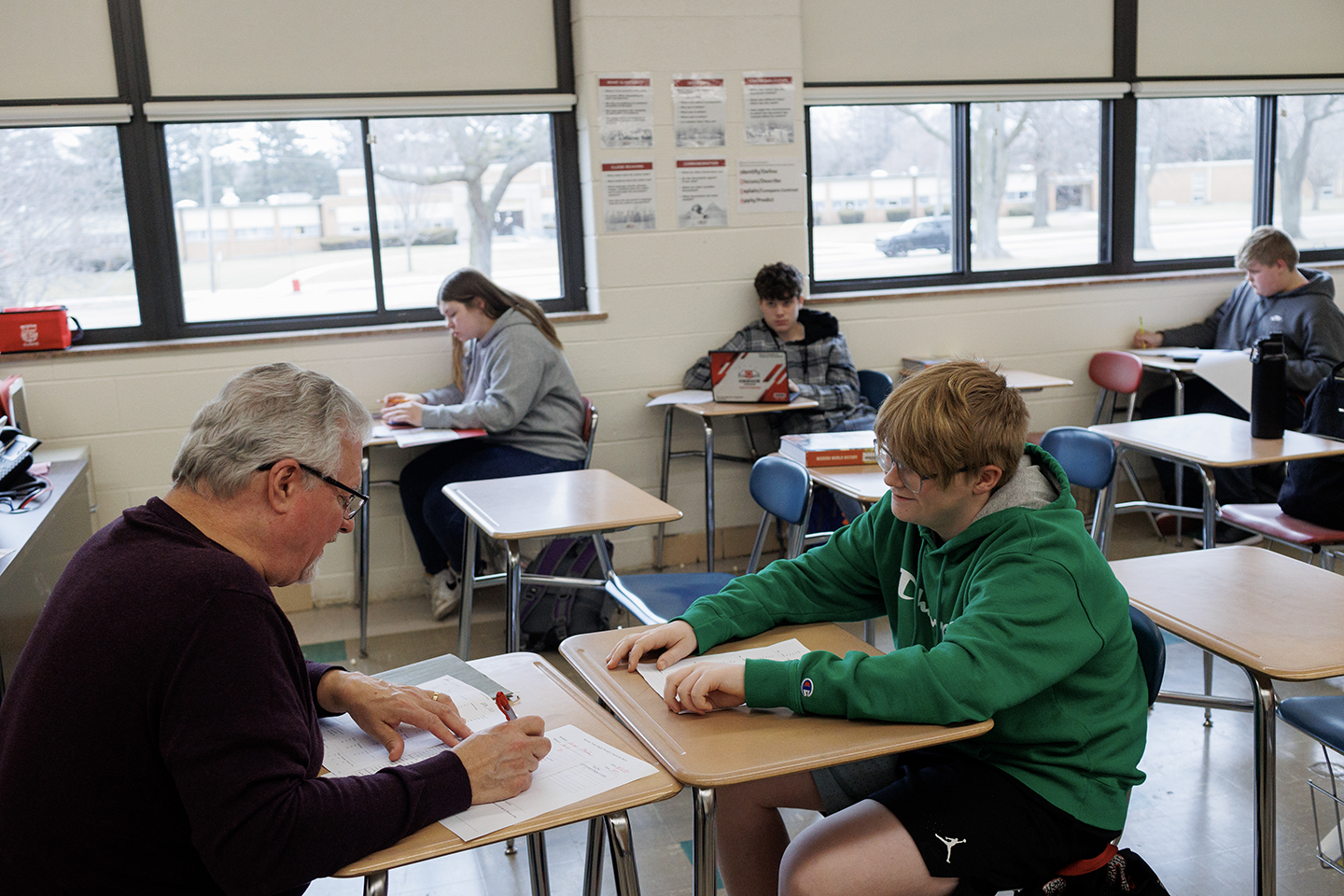
Educational games can make lessons more interactive, enjoyable, and meaningful for students. Instead of learning only through lectures, textbooks, or worksheets, students participate in activities that challenge them to solve problems, answer questions, work with classmates, and apply what they know. When teachers choose games that support clear learning objectives, students can practice important skills while staying actively involved in the lesson.
Educational games for classroom learning can be used in almost every subject, including mathematics, science, English, history, geography, and foreign languages. Some activities require only paper and a whiteboard, while others use cards, classroom objects, digital platforms, or team challenges. Teachers can adapt these games to different ages, abilities, class sizes, and learning environments.
However, games are most effective when they are more than a source of entertainment. A well-planned educational game gives students meaningful practice, useful feedback, and opportunities to understand mistakes. This guide explores the benefits of educational games, practical activities teachers can use, and strategies for making game-based learning inclusive and effective.
What Are Educational Games for Classroom Learning?
Educational games are structured activities designed to help students develop knowledge or skills through participation, challenges, rules, and feedback. They may involve answering questions, solving puzzles, completing missions, matching information, or working toward a shared goal.
For example, a teacher teaching multiplication might organize a number challenge in which students solve problems to earn points for their teams. In a language lesson, students might play a vocabulary matching game. During science class, learners could sort objects according to their properties or solve clues about the human body.
Unlike games played only for entertainment, educational games are connected to specific learning outcomes. Teachers select the activity based on what students need to understand or practice.
Educational games can be competitive, cooperative, digital, or completely offline. The best choice depends on the lesson objective, available resources, student needs, and the type of practice required.
Why Are Educational Games Important in the Classroom?
When games are carefully connected to instruction, they can help students participate more actively and practice academic skills in different ways.
1. Increase Student Engagement
Long periods of passive learning can make it difficult for some students to maintain attention. Games introduce variety, challenges, and opportunities for students to take an active role.
A short quiz game, for instance, can encourage students to recall information from a previous lesson. A puzzle activity can give them a reason to explore a concept instead of simply memorizing a definition.
Engagement does not automatically mean learning, however. Teachers should make sure that students understand the purpose of each activity and can connect it to the lesson.
2. Strengthen Memory and Recall
Many educational games require students to retrieve information repeatedly. Vocabulary matching, mathematics challenges, and question-and-answer games provide opportunities to practice recalling knowledge.
Repeated practice can support learning, especially when questions are revisited over time rather than presented only once. Teachers can also explain incorrect answers so students learn from mistakes instead of simply moving to the next question.
3. Develop Problem-Solving Skills
Puzzles, logic games, and classroom challenges encourage students to examine information, test possible solutions, and adjust their strategies.
For example, a science game might ask students to identify which materials would be best for keeping an object warm. Students must consider evidence and explain their choices rather than guess randomly.
These experiences can support reasoning and decision-making across different subjects.
4. Encourage Teamwork and Communication
Cooperative games require students to share ideas, divide responsibilities, listen to classmates, and work toward a common objective.
Teachers can assign rotating roles such as reader, recorder, materials manager, and presenter. This helps distribute participation instead of allowing one student to complete the entire activity.
5. Provide Immediate Feedback
Games often show students whether an answer is correct or whether a strategy has worked. This feedback helps learners identify misunderstandings while the activity is taking place.
Teachers should go beyond telling students whether they are right or wrong. Ask them to explain their reasoning, correct errors, and try another approach when necessary.
6. Support Different Learning Needs
Educational games can present information through words, images, movement, discussion, and practical materials. This variety creates additional ways for students to engage with a concept.
Teachers can adjust the difficulty, provide hints, offer extra thinking time, or allow students to demonstrate their knowledge in different ways. The goal is to make learning accessible without removing meaningful challenges.
15 Educational Games for Classroom Learning
The following educational games for classroom learning are suitable for different subjects and grade levels. Teachers can adapt the rules and difficulty to match their students’ needs.
1. Classroom Quiz Challenge
<AsyncImage query=”school students playing educational classroom quiz game teacher whiteboard” aspectRatio=”16:9″ width=”100%” />
A classroom quiz challenge is a simple way to review information after a lesson or prepare students for an assessment.
How to play:
- Prepare questions related to the current topic.
- Divide the class into small teams or let students answer individually.
- Display one question at a time.
- Give students time to discuss or write their answers.
- Review each answer and explain the reasoning.
Subjects: Mathematics, science, history, English, and general knowledge.
Learning benefits: Strengthens recall, encourages participation, and helps teachers identify concepts that need further explanation.
Teacher tip: Include questions at different difficulty levels. Award points for explaining an answer, not only for responding quickly.
2. Vocabulary Matching Game
<AsyncImage query=”educational vocabulary matching word cards classroom activity on desk” aspectRatio=”16:9″ width=”100%” />
This game helps students learn new words, definitions, synonyms, antonyms, or foreign-language vocabulary.
How to play:
- Prepare cards containing words and separate cards containing their meanings.
- Mix the cards and place them face down or spread them across a table.
- Students take turns matching each word to the correct definition.
- Ask students to use matched words in sentences.
- Review difficult vocabulary as a class.
Subjects: English, reading, language learning, and science terminology.
Learning benefits: Builds vocabulary, reading comprehension, and accurate use of subject-specific language.
Teacher tip: For younger learners, include pictures alongside words. For older students, use synonyms, word roots, or more complex definitions.
3. Mathematics Bingo
Mathematics Bingo turns calculation practice into an interactive classroom activity.
How to play:
- Give each student a bingo card containing numbers or answers.
- Read aloud a mathematics problem, such as (6 \times 7).
- Students calculate the answer and check whether it appears on their cards.
- Students mark the matching answer.
- Ask a student to explain a solution when someone completes a row or another agreed pattern.
Subjects: Mathematics.
Learning benefits: Provides repeated practice with arithmetic, mental calculation, and number recognition.
Teacher tip: Check completed cards before declaring a winner. Use different versions for addition, fractions, decimals, multiplication, or algebra.
4. Educational Scavenger Hunt
A scavenger hunt encourages students to explore the classroom, learning materials, or a carefully selected outdoor area to find information.
How to play:
- Prepare clues or questions related to the lesson.
- Place information cards or relevant objects at suitable locations.
- Organize students into pairs or small groups.
- Ask each group to solve the clues and record its findings.
- Review the answers together and explain important concepts.
Subjects: Science, geography, literature, and environmental education.
Learning benefits: Encourages observation, teamwork, movement, and practical application.
Teacher tip: Keep the activity within a clearly defined area and provide an accessible alternative for students who cannot move between stations.
5. Science Sorting Game
Students learn to classify information by sorting objects, pictures, or statement cards into appropriate categories.
How to play:
- Choose a topic, such as living and nonliving things, states of matter, or vertebrates and invertebrates.
- Prepare a collection of pictures, objects, or descriptions.
- Ask students to sort the items into categories.
- Have groups explain why each item belongs in a particular category.
- Discuss any items that students found difficult to classify.
Subjects: Science and environmental studies.
Learning benefits: Develops observation, classification, scientific vocabulary, and reasoning.
Teacher tip: Include a few challenging examples that encourage discussion, but ensure that students have enough background knowledge to reason about them.
6. Word Scramble Challenge
A word scramble helps students practice spelling and recall subject-specific terminology.
How to play:
- Select words from the current lesson.
- Rearrange the letters of each word.
- Display the scrambled words on a board or worksheet.
- Give students a clue or definition for each word.
- Ask students to write the correct spelling and explain the word’s meaning.
Subjects: English, foreign languages, science, and social studies.
Learning benefits: Reinforces spelling, vocabulary, and recognition of important terms.
Teacher tip: Avoid making speed the only measure of success. Allow students to use clues or work in pairs when the goal is vocabulary development.
7. Role-Playing Game
Role-playing allows students to explore ideas by taking on characters or responsibilities in a structured scenario.
How to play:
- Choose a scenario connected to the lesson.
- Assign students roles with clear goals or responsibilities.
- Give them a short preparation period.
- Let students act out the scenario or discuss how they would respond.
- Finish with a reflection on the decisions made and the knowledge applied.
For example, students studying local government might role-play a community meeting about improving a public park.
Subjects: History, social studies, language arts, and life skills.
Learning benefits: Encourages empathy, communication, decision-making, and deeper understanding of real-world situations.
Teacher tip: Provide written role cards and allow students to participate as observers, writers, or discussion leaders if they prefer not to perform.
8. Memory Card Game
A memory game asks students to find matching pairs of related information.
How to play:
- Create pairs of cards, such as words and definitions, fractions and pictures, or historical events and dates.
- Place the cards face down.
- Students turn over two cards on each turn.
- If the cards match, students explain the connection and keep the pair.
- Continue until the pairs are found or the activity ends.
Subjects: Mathematics, vocabulary, history, and science.
Learning benefits: Supports recall, concentration, and connections between concepts.
Teacher tip: Use a smaller number of pairs at first. Increase the difficulty as students become more familiar with the material.
9. The Question Hot Seat
This activity helps students review knowledge and practice explaining answers in their own words.
How to play:
- Place one student in a designated seat at the front or within a small group.
- Ask classmates to present questions from a prepared list or current lesson.
- The student answers using their knowledge and available clues.
- Invite the class to explain or correct answers constructively.
- Rotate the role so different students can participate.
Subjects: Almost any subject.
Learning benefits: Encourages retrieval practice, oral communication, and quick organization of ideas.
Teacher tip: Make passing an option and avoid using the game to embarrass students who are uncertain. Small-group versions can reduce pressure.
10. Story-Building Game
Students work together to create a story using vocabulary, characters, events, or concepts supplied by the teacher.
How to play:
- Provide a starting sentence or a set of required words.
- Ask each student to contribute one sentence or story element.
- Encourage students to maintain a logical sequence.
- Ask the class to identify the beginning, middle, and end.
- Discuss vocabulary, grammar, structure, or subject knowledge used in the story.
Subjects: English, reading, creative writing, and language learning.
Learning benefits: Develops creativity, writing skills, collaboration, and vocabulary.
Teacher tip: For science or history lessons, ask students to incorporate accurate facts into their stories.
11. Geography Map Challenge
A map challenge helps students become familiar with locations, physical features, and spatial relationships.
How to play:
- Display a blank or labeled map suitable for the lesson.
- Give students location clues or name geographical features.
- Ask them to identify countries, capitals, rivers, mountains, or regions.
- Let pairs compare their answers.
- Review the locations and discuss their significance.
Subjects: Geography, history, and social studies.
Learning benefits: Strengthens map-reading, spatial awareness, and geographical knowledge.
Teacher tip: Progress from locating places to explaining patterns, such as why settlements develop near rivers or coastlines.
12. Digital Learning Quiz
Digital quiz tools can provide interactive questions and quick feedback. They are especially useful when teachers have access to suitable devices and a reliable classroom setup.
How to play:
- Prepare questions linked to a lesson objective.
- Select an appropriate quiz platform or classroom response tool.
- Explain how students will submit their answers.
- Run the quiz and review the results.
- Revisit concepts that many students answered incorrectly.
Subjects: All subjects.
Learning benefits: Provides rapid feedback and helps teachers identify gaps in understanding.
Teacher tip: Offer a paper-based or shared-device alternative when students do not have individual access to technology. Follow school rules for privacy and digital safety.
13. Fraction Pizza Game
This hands-on game helps students visualize fractions and understand how parts combine to form a whole.
How to play:
- Draw or cut out circles representing pizzas.
- Divide each circle into equal sections, such as halves, thirds, fourths, or eighths.
- Give students fraction cards or instructions for building a particular pizza.
- Ask them to select the correct pieces.
- Discuss equivalent fractions and combinations that make a whole.
Subjects: Mathematics.
Learning benefits: Makes abstract fraction concepts more concrete and encourages visual reasoning.
Teacher tip: Ask students to explain why two different combinations represent the same amount, such as one-half and two-fourths.
14. Team Puzzle Challenge
Team puzzles require students to combine information and solve a problem together.
How to play:
- Choose a puzzle connected to the lesson.
- Give each team the same task and any required materials.
- Encourage members to explain their ideas before making decisions.
- Let teams test possible solutions.
- Discuss the strategies that helped them succeed.
Subjects: Mathematics, science, language arts, and problem-solving lessons.
Learning benefits: Develops logic, persistence, communication, and collaborative reasoning.
Teacher tip: Use puzzles that require the target skill rather than unrelated tricks. Give hints when students become stuck for too long.
15. Exit Ticket Game
An exit ticket is a short activity that checks what students have understood at the end of a lesson.
How to play:
- Prepare two or three questions related to the lesson.
- Ask students to answer individually on paper or through an approved digital tool.
- Invite them to include one question they still have.
- Review the responses after class.
- Use the results to plan the next lesson.
Subjects: All subjects.
Learning benefits: Reinforces key ideas, encourages reflection, and provides useful information for future teaching.
Teacher tip: Keep the questions short and focused. The purpose is to check understanding, not to create another lengthy assessment.
How to Choose the Right Educational Game
Not every game suits every lesson. Teachers can make better choices by considering what students need to learn and how the activity supports that objective.
Match the Game to the Learning Objective
Start with the intended outcome. If students need to remember vocabulary, a matching game may be useful. If they need to explain scientific reasoning, a classification challenge or structured problem-solving game may be more appropriate.
The game should help students practice the target skill rather than distract from it.
Consider Students’ Ages and Abilities
Younger students often benefit from clear instructions, visual materials, short rounds, and familiar examples. Older students may enjoy complex problems, strategic decisions, collaborative projects, and challenges requiring multiple steps.
Adjust the difficulty so that students are challenged without becoming unnecessarily frustrated.
Choose Between Competitive and Cooperative Games
Competitive games can motivate some students, but excessive emphasis on winning may discourage others or cause students to focus on points rather than learning.
Cooperative games encourage students to work toward shared goals. Teachers can also combine both approaches by awarding group points for accurate reasoning, teamwork, improvement, and helpful explanations.
Consider Available Resources
Many effective games require no technology. Paper cards, classroom objects, worksheets, a board, and student-created questions can support a wide range of activities.
Digital games can be helpful when devices are available, but they should not be a requirement for meaningful game-based learning.
How to Make Educational Games Inclusive
Educational games should give all students a reasonable opportunity to learn and participate.
Provide clear instructions. Explain the rules, demonstrate an example, and check that students understand what they need to do.
Offer different levels of challenge. Use easier starting questions, optional hints, and more complex extension tasks.
Allow different ways to participate. Students may answer verbally, write responses, use visual materials, or contribute through group roles.
Make materials accessible. Use readable text, clear images, suitable contrast, and physical materials that students can handle comfortably.
Avoid relying only on speed. Timed activities may disadvantage students who need additional processing time. Include rounds where accuracy, reasoning, or teamwork matters more than speed.
Use supportive feedback. Treat incorrect answers as opportunities to identify misunderstandings and try a new strategy.
Monitor participation. Make sure that every student has a meaningful role and that confident learners do not dominate group activities.
How to Measure Learning Through Educational Games
Teachers should evaluate whether a game improves understanding, not simply whether students enjoy it.
Observe Student Performance
Watch how students solve problems, explain their choices, and apply concepts. Record common mistakes and areas where students need further support.
Ask Students to Explain Their Answers
After a round, ask questions such as:
- How did you reach that answer?
- What evidence helped you decide?
- Why did that strategy work?
- What would you do differently next time?
Explanations help teachers distinguish genuine understanding from guessing.
Use Short Before-and-After Checks
Give students a few questions before and after a game. Comparing responses can help reveal whether the activity supported learning.
For skills that require longer-term development, revisit the questions in a later lesson rather than relying only on an immediate check.
Encourage Reflection
Ask students to write one thing they learned, one mistake they corrected, and one question they still have. This reflection reinforces learning and helps teachers plan future instruction.
Keep Competition in Perspective
Do not use winning as the only measure of success. A student who explains a difficult concept, improves their strategy, or supports a teammate may demonstrate valuable learning even if their team does not win.
Common Mistakes to Avoid When Using Educational Games
Educational games can lose their value when the activity is poorly matched to the lesson or inadequately managed.
Playing without a clear objective: Choose a specific skill or concept that students should practice.
Making rules too complicated: Keep instructions simple, demonstrate an example, and explain how the activity ends.
Rewarding speed over understanding: Include points for correct explanations, thoughtful reasoning, and cooperation.
Allowing a few students to dominate: Assign rotating roles and design tasks that require contributions from multiple team members.
Ignoring mistakes: Review incorrect answers and use them to identify concepts that need additional teaching.
Using technology without a purpose: Select digital tools because they support the learning objective, not simply because they look entertaining.
Skipping the review: Finish by connecting the game to the lesson, explaining important answers, and checking what students learned.
Frequently Asked Questions
What are the best educational games for classroom learning?
Popular options include classroom quiz challenges, vocabulary matching, mathematics bingo, science sorting, educational scavenger hunts, role-playing, memory games, geography challenges, and team puzzles. The best game depends on the subject, students’ ages, available resources, and the learning objective.
Can educational games improve student learning?
Educational games can support learning by providing active practice, feedback, repetition, collaboration, and opportunities to apply knowledge. Their effectiveness depends on the quality of the activity and how well it is connected to instruction.
How can teachers use educational games without technology?
Teachers can use flashcards, board games, word scrambles, paper puzzles, role-playing, scavenger hunts, mathematics challenges, and team quizzes. These activities can be effective without computers, tablets, or internet access.
How long should an educational game last?
A short review game may take 5–10 minutes, while a more complex activity may need 20–30 minutes or longer. Choose a duration that allows students to understand the rules, practice the target skill, and review what they learned.
Are competitive educational games suitable for every student?
Not always. Some students enjoy competition, while others may feel anxious or discouraged. Teachers can use cooperative challenges, individual progress goals, flexible participation, and rewards for reasoning and teamwork to create a more supportive environment.
How can educational games support different learning abilities?
Teachers can adjust difficulty, provide visual aids, use flexible grouping, offer additional thinking time, and provide different ways to respond. Accessible rules and supportive feedback help students participate at an appropriate level.
What is the difference between educational games and gamification?
Educational games are activities with rules, challenges, or goals designed to support learning. Gamification applies game-like features—such as points, progress indicators, levels, or badges—to activities that are not necessarily games themselves.
Conclusion
Educational games can make classroom learning more engaging by giving students opportunities to practice skills, solve problems, communicate with classmates, and receive feedback. From simple vocabulary cards to science challenges and digital quizzes, teachers can choose activities that fit almost any subject or age group.
The most effective educational games for classroom learning have clear objectives, manageable rules, inclusive participation, and a meaningful connection to the lesson. Teachers should also review students’ answers, correct misunderstandings, and encourage reflection after each activity.
Start with one short game that supports a current lesson, observe how students respond, and adapt the activity based on what they learn. With thoughtful planning, educational games can become a practical part of everyday teaching rather than an occasional classroom reward.
