
Every student deserves the opportunity to learn, participate, and feel valued at school. However, students with disabilities may encounter barriers that make classroom learning more difficult, including inaccessible materials, inflexible teaching methods, communication challenges, sensory distractions, and activities that offer only one way to participate.
Inclusive classroom practices help teachers identify and reduce these barriers so that students with different abilities, learning needs, and communication styles can take part in meaningful educational experiences. Inclusion is not simply placing students with disabilities in the same classroom as their peers. It involves creating an environment where students can access instruction, build relationships, demonstrate their knowledge, and participate with appropriate support.
Teachers can promote inclusion by using flexible teaching methods, providing accessible learning materials, offering reasonable accommodations, encouraging peer collaboration, and working with students, families, and support professionals.
This guide explores practical inclusive classroom practices for students with disabilities, explains how teachers can implement them, and provides strategies for building a classroom where every learner has opportunities to succeed.
What Are Inclusive Classroom Practices?
Inclusive classroom practices are teaching methods, classroom routines, environmental adjustments, and support strategies that help students with different needs participate in learning.
These practices recognize that students do not all learn, communicate, move, process information, or demonstrate understanding in the same way. Instead of expecting every learner to adapt to one fixed teaching approach, teachers provide appropriate ways for students to access lessons and work toward meaningful learning goals.
For example, a teacher might explain a science concept verbally, display a diagram, provide written instructions, and offer a hands-on demonstration. These options can help students understand the same concept through different forms of presentation.
Inclusive teaching does not mean lowering academic expectations or giving every student identical support. It means maintaining meaningful learning goals while removing unnecessary barriers and providing the support students need to work toward those goals.
Why Inclusive Education Matters for Students With Disabilities
Inclusive classrooms can support academic participation, independence, social connection, and a sense of belonging when students receive appropriate instruction and support.
1. Improves access to learning
Students may experience barriers when lessons rely on a single format, such as spoken instructions, small printed text, lengthy written responses, or activities requiring particular physical movements.
Teachers can reduce these barriers by offering accessible documents, clear explanations, visual supports, assistive technology, and alternative ways to complete appropriate learning tasks.
2. Encourages social participation
Students learn from their interactions with classmates. Cooperative projects, structured discussions, and shared classroom responsibilities can create opportunities for students with disabilities to contribute their ideas and develop relationships.
However, inclusion requires more than placing students in groups. Teachers should ensure that every student has a meaningful role and that classmates treat one another with respect.
3. Builds independence and confidence
When students receive suitable tools and opportunities to make choices, they can develop greater independence in their learning.
For example, a student might use a visual checklist to organize an assignment, speech-to-text software to compose a response, or a communication device to contribute to a discussion.
The aim is to support the student’s participation without unnecessarily taking over tasks the student can perform independently.
4. Recognizes different strengths and abilities
Students with disabilities have different interests, talents, experiences, and support needs. Inclusive instruction allows teachers to recognize individual strengths while addressing barriers that affect learning.
Some students may excel in visual reasoning, creative problem-solving, oral explanation, practical tasks, or detailed analysis. Providing varied opportunities to participate helps teachers recognize a wider range of abilities.
5. Supports a respectful classroom culture
Inclusive classrooms can help all students understand that people learn and communicate in different ways. Teachers can model respectful language, address stereotypes, and establish expectations that protect students from exclusion, teasing, and discrimination.
Inclusion should be planned and supported at the classroom and school levels rather than left to individual teachers to manage alone.
12 Practical Inclusive Classroom Practices for Students With Disabilities
The following strategies can be adapted for different subjects, grade levels, and learning environments. Teachers should consider each student’s individual strengths, needs, preferences, and applicable support plan when selecting accommodations.
1. Use Multiple Ways to Present Information
Students may find certain types of information difficult to access. For example, a learner with a visual impairment may need an accessible digital document, while a student with a language-processing difficulty may benefit from short written instructions alongside an oral explanation.
Present important information in more than one format whenever practical.
Teachers can:
- Explain key ideas verbally and display important points in writing.
- Use diagrams, charts, photographs, and models.
- Provide accessible digital documents.
- Demonstrate procedures before asking students to complete them.
- Break complex instructions into smaller steps.
- Preview important vocabulary before introducing a new topic.
For example, during a lesson about the water cycle, a teacher could explain evaporation and condensation, display a labelled diagram, demonstrate the process with an appropriate model, and provide a short written summary.
These options can help students access the same core learning objectives without requiring everyone to rely on one format.
2. Provide Accessible Learning Materials
Learning materials should be usable by students who have different sensory, physical, cognitive, and communication needs.
Teachers can improve accessibility by checking the format and layout of worksheets, presentations, textbooks, and online assignments before using them.
Practical steps include:
- Use readable fonts and adequate text size.
- Maintain strong contrast between text and background.
- Add meaningful alternative text to informative images.
- Provide captions for instructional videos when available.
- Use headings and clear document structures.
- Avoid relying on colour alone to communicate important information.
- Ensure digital materials work with relevant assistive technologies.
For example, instead of identifying the correct answer only by highlighting it in red, a teacher can also label it clearly or use a distinctive symbol.
Accessible materials benefit students with disabilities and may also help learners who are working in a second language, studying in a noisy environment, or reviewing information independently.
3. Apply Universal Design for Learning
Universal Design for Learning, often called UDL, encourages educators to anticipate learner variability when designing lessons. Rather than waiting until a student encounters a barrier, teachers consider accessibility during lesson planning.
Engagement: Offer meaningful ways to build interest, motivation, and persistence.
- Representation: Present information in accessible and varied formats.
- Action and expression: Provide appropriate ways for students to respond, practise, and demonstrate learning.
For example, after teaching a history topic, a teacher might allow students to demonstrate understanding through a written explanation, an oral presentation, or a structured visual project, when those options align with the learning objective.
UDL does not replace individualized accommodations. Some students still require specific adjustments, specialist instruction, or assistive technology to access learning successfully.
4. Offer Flexible Ways for Students to Demonstrate Learning
A student’s knowledge and a student’s ability to complete a particular type of task are not always the same thing.
For instance, a written essay may assess both knowledge of a topic and written expression. If the main objective is to assess scientific understanding, a student with a relevant disability may be able to demonstrate that understanding through an oral explanation, an accessible digital response, or another suitable format.
Teachers should first identify what the assessment is intended to measure.
Possible options include:
- Written responses
- Oral explanations
- Presentations
- Diagrams and labelled models
- Recorded responses
- Practical demonstrations
- Assistive technology
The alternative should preserve the essential learning objective. If the assessment specifically measures handwriting, reading fluency, or written composition, changing the response format may alter what is being assessed. In those situations, teachers should follow the relevant curriculum requirements and the student’s approved accommodations.
5. Establish Predictable Classroom Routines
Predictable routines can help students understand what to expect and what they need to do next. They may be particularly useful for students who experience executive-function difficulties, anxiety, attention challenges, or a need for additional processing time.
Teachers can support predictable routines by:
- Displaying the daily schedule.
- Explaining changes in advance whenever possible.
- Providing written instructions for multi-step tasks.
- Using consistent signals for transitions.
- Breaking long assignments into manageable stages.
- Showing examples of completed work.
- Allowing time to prepare for changes in activity.
For example, a teacher might display a lesson sequence showing a short introduction, a demonstration, guided practice, independent work, and a final review.
If the schedule must change, explaining the change clearly and calmly can help students prepare for the new expectations.
6. Make Classroom Spaces Physically Accessible
Students need to move through the classroom, reach learning materials, and use classroom equipment as independently as possible.
Teachers and school leaders should assess whether the physical environment creates avoidable barriers.
Consider:
- Clear pathways between desks.
- Accessible entrances and exits.
- Suitable desk and seating arrangements.
- Materials positioned within students’ reach.
- Appropriate lighting.
- Reduced unnecessary clutter.
- Access to required mobility or positioning equipment.
- Safe routes to shared spaces and classroom resources.
A student who uses a wheelchair, for example, may need sufficient turning space and a desk that accommodates their mobility equipment.
Physical accessibility may require changes beyond a teacher’s authority. In those cases, staff should work with school leadership and relevant accessibility professionals rather than expecting the student to manage the barrier independently.
7. Use Assistive Technology When Appropriate
Assistive technology can help students access information, communicate, organize tasks, and demonstrate knowledge.
Depending on a student’s needs, useful tools may include:
- Screen readers and text-to-speech software.
- Speech-to-text tools.
- Enlarged text and screen magnification.
- Accessible keyboards or alternative input devices.
- Communication boards and speech-generating devices.
- Digital planners and visual schedules.
- Captioning and accessible media tools.
Technology should be selected according to the student’s needs, preferences, and existing support arrangements. A tool that works well for one student may not be suitable for another.
Teachers should also make sure that students have time to learn how to use the technology and that required materials are compatible with it.
Whenever possible, include the student in decisions about which tools are helpful. Assistive technology should increase access and participation, not draw unnecessary attention to a student’s disability.
8. Structure Cooperative Learning Carefully
Group activities can encourage communication, shared problem-solving, and social connection. However, poorly structured group work can leave students with disabilities excluded from important decisions or assigned only minor tasks.
Teachers can make group learning more inclusive by:
- Giving every student a meaningful role.
- Explaining the group’s shared objective.
- Providing instructions in accessible formats.
- Allowing sufficient time for participation.
- Encouraging students to share ideas in different ways.
- Monitoring whether all group members contribute.
- Assessing individual understanding when appropriate.
For example, during a science investigation, one student might record observations using speech-to-text, another might manage materials, and another might explain the results. Roles should be based on the task and student preferences rather than assumptions about disability.
Rotate responsibilities over time so students have opportunities to develop new skills.
9. Use Clear, Direct, and Respectful Communication
Students may process spoken language, written instructions, or social cues differently. Teachers can improve communication by making expectations clear and avoiding unnecessary complexity.
Helpful practices include:
- Use specific instructions rather than vague directions.
- Give one step at a time when appropriate.
- Pause to allow students to process information.
- Check understanding without embarrassing the student.
- Explain unfamiliar vocabulary.
- Provide written or visual reminders.
- Speak directly to the student rather than automatically addressing a companion or support person.
Instead of saying, “Get ready for the next thing,” a teacher could say, “Please put your notebook in your bag, take out your science worksheet, and sit with your group.”
Clear communication supports the whole class, not only students with disabilities.
10. Provide Appropriate Sensory Support
Classroom environments can contain noise, bright lighting, crowded spaces, strong smells, and frequent movement. Some students experience these conditions as distracting, uncomfortable, or overwhelming.
Teachers can explore practical adjustments, such as:
- Reducing unnecessary background noise.
- Providing access to a quieter work area when appropriate.
- Offering seating choices that reduce distractions.
- Giving advance notice of loud activities.
- Allowing approved sensory tools.
- Keeping classroom displays organized.
- Establishing a calm, respectful process for taking a short break.
For example, a student who finds a busy classroom difficult may benefit from completing part of an assignment in a quieter location, if this is consistent with their needs and school arrangements.
Teachers should avoid assuming that all students with a particular diagnosis have the same sensory preferences. Ask the student, family, or relevant support professionals which adjustments are appropriate.
11. Adapt Assignments Without Removing Meaningful Learning Goals
An accommodation changes how a student accesses learning or completes a task. A modification may change the learning expectations themselves. The appropriate choice depends on the student’s needs, curriculum requirements, and support plan.
Possible accommodations include:
- Additional time where appropriate.
- Reduced visual clutter on worksheets.
- Chunked assignments.
- Alternative response methods.
- Accessible reading formats.
- Scheduled breaks.
- Clear task checklists.
- Supportive organizational tools.
For example, a student who finds a long worksheet overwhelming may benefit from receiving the same task in smaller sections, with clear stopping points.
Teachers should avoid automatically reducing the intellectual challenge for a student with a disability. Instead, identify the barrier and determine whether it can be removed while maintaining the essential learning objective.
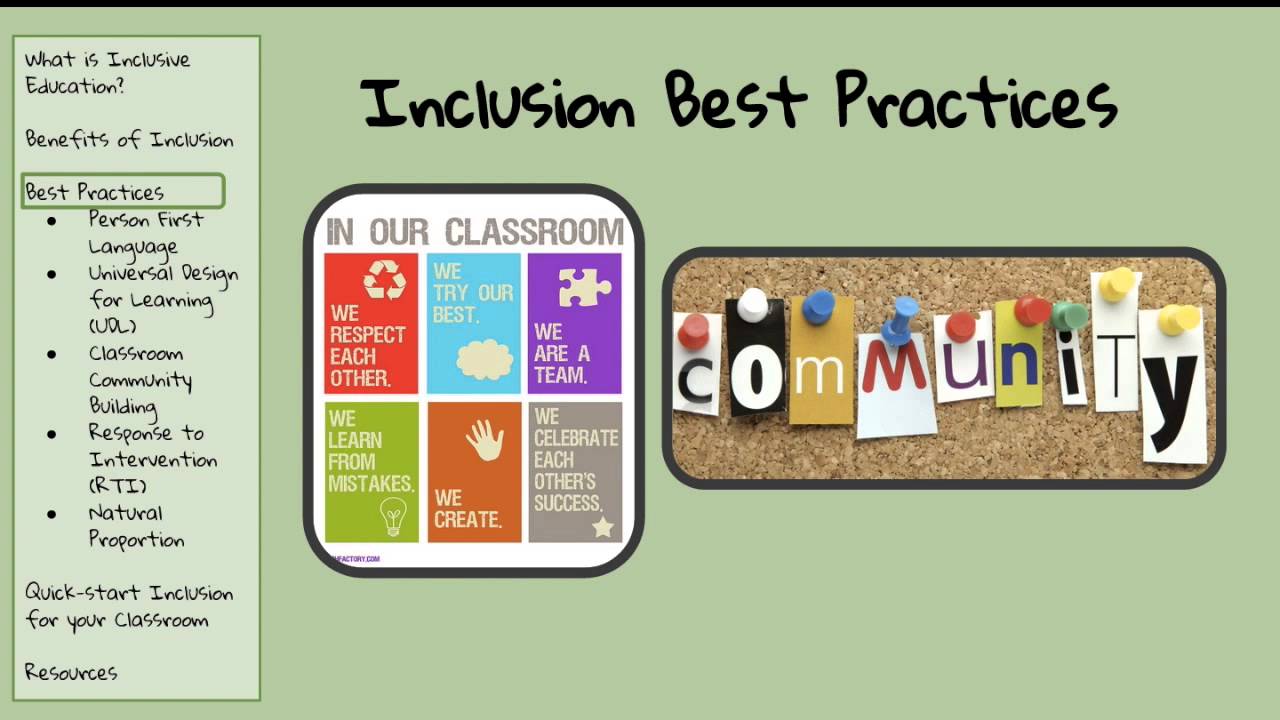
12. Build a Classroom Culture of Belonging and Respect
Inclusive teaching also involves relationships, classroom expectations, and the way students treat one another.
Teachers can encourage belonging by:
- Using respectful, non-stigmatizing language.
- Addressing teasing, exclusion, and discriminatory behaviour.
- Ensuring students have opportunities to participate in class discussions.
- Avoiding assumptions about what a student can or cannot do.
- Respecting privacy when discussing accommodations.
- Recognizing contributions from students with different strengths.
- Teaching students how to cooperate respectfully.
Teachers should not require students with disabilities to explain their conditions to classmates or share private information.
When disability awareness is included in classroom learning, it should be age-appropriate, respectful, and focused on accessibility, dignity, and inclusion rather than stereotypes or pity.
Inclusive Classroom Practices for Different Disabilities
Disability is not a single experience. Students with the same diagnosis may have different strengths, preferences, and support needs. The following examples are starting points for discussion, not universal rules.
| Student needs | Possible classroom practices |
|---|---|
| Visual impairment | Accessible digital text, screen-reader-compatible documents, tactile materials where suitable, verbal descriptions of important visual information |
| Hearing impairment | Captions, written instructions, suitable seating, visual cues, and communication approaches agreed with the student |
| Mobility disability | Clear pathways, accessible desks, suitable equipment, and sufficient time to move between activities |
| Dyslexia or other reading difficulties | Accessible text formats, explicit literacy instruction, clear layouts, and appropriate reading or writing tools |
| Attention or executive-function difficulties | Task checklists, chunked assignments, predictable routines, and planned organizational support |
| Autism or sensory-processing differences | Clear expectations, advance notice of changes, appropriate sensory adjustments, and respectful communication |
| Speech or communication disabilities | Additional response time, communication boards or devices, and acceptance of appropriate alternative communication methods |
| Intellectual or developmental disabilities | Explicit instruction, visual supports, guided practice, accessible task steps, and individualized scaffolding |
Teachers should avoid using this table as a diagnostic guide. Individual accommodations should be based on the student’s actual needs and, where applicable, professional recommendations and formal support plans.
How Teachers Can Plan an Inclusive Lesson
Inclusive lessons are easier to deliver when accessibility is considered before teaching begins.
Step 1: Identify the main learning objective
Decide what students should understand or be able to do by the end of the lesson.
A clear objective helps teachers distinguish essential learning goals from the particular method used to teach or assess them.
Step 2: Identify potential barriers
Consider whether students may encounter difficulties because of the lesson’s format, language, materials, physical environment, time requirements, or response method.
For example, a lesson that depends entirely on interpreting a complex diagram may create unnecessary barriers for students who cannot access the visual information.
Step 3: Prepare flexible materials and methods
Choose suitable supports before the lesson begins. These might include written instructions, captioned videos, accessible documents, visual examples, assistive technology, or alternative ways to practise the skill.
Step 4: Explain expectations clearly
Tell students what they are learning, why it matters, what they need to do, and how they can demonstrate their understanding.
Provide instructions in formats that students can access and revisit.
Step 5: Monitor participation and understanding
Observe whether students can access the task, contribute meaningfully, and make progress toward the learning objective.
If a student is not participating, consider whether the difficulty relates to the task design, environment, instructions, materials, or another support need.
Step 6: Reflect and adjust
After the lesson, identify which supports were effective and which barriers remain. Use student feedback, classroom observations, and learning evidence to improve the next lesson.
Working With Families and Support Professionals
Teachers are not expected to identify or address every disability-related need alone. Effective inclusion often depends on collaboration between classroom teachers, students, families, special education teachers, therapists, school counsellors, and other relevant professionals.
Communicate regularly with families
Families may understand which routines, tools, and communication strategies work well for their child. Teachers can share observations and ask for relevant information while respecting privacy and maintaining professional boundaries.
Communication should be collaborative rather than focused only on difficulties. Share successes, progress, and strategies that help the student participate.
Involve students in decisions
Whenever appropriate, ask students which supports help them learn and participate. Older students, in particular, can contribute valuable information about their preferences, goals, and experiences.
Student participation can also encourage self-advocacy: the ability to explain one’s needs, ask for support, and make informed choices.
Coordinate with specialists
Special education teachers and relevant professionals can help teachers understand accommodations, accessible materials, communication methods, and individualized learning goals.
For students with formal support plans, follow the applicable plan and school procedures. Do not independently remove required accommodations or change agreed support arrangements without appropriate consultation.
Protect student privacy
Discuss a student’s disability-related information only with people who have an appropriate educational reason to know it. Avoid sharing sensitive details in public classroom discussions or using a student’s needs as an example without permission.
How Schools Can Support Inclusive Classroom Practices
Inclusive education is more effective when the school environment supports teachers and students consistently.
School leaders can:
- Provide professional development on accessibility and inclusive instruction.
- Ensure classrooms and shared spaces are accessible.
- Budget for appropriate assistive technology and learning materials.
- Make specialist support available where possible.
- Establish clear processes for requesting accommodations.
- Review policies that may create unnecessary barriers.
- Encourage collaboration between general and special education staff.
- Consult students and families about barriers to participation.
Schools should also review whether students with disabilities can participate in extracurricular activities, school trips, assessments, assemblies, and other aspects of school life—not only regular classroom lessons.
Common Mistakes to Avoid in Inclusive Classrooms
Assuming all students with the same disability need the same support
Disability affects people differently. Teachers should learn about each student’s individual needs instead of relying on general assumptions.
Confusing inclusion with physical placement
A student may be present in a classroom but unable to access the materials, contribute to group work, or demonstrate understanding. Genuine inclusion requires meaningful participation.
Lowering expectations unnecessarily
Students with disabilities should have opportunities to work toward challenging, appropriate learning goals. Teachers should identify and remove barriers instead of assuming a student cannot succeed.
Providing accommodations without checking whether they help
A strategy may be well intentioned but ineffective for a particular student. Ask for feedback, observe participation, and adjust support when appropriate.
Treating assistive technology as a complete solution
Technology can improve access, but it may require training, compatible materials, reliable equipment, and additional teaching support.
Ignoring bullying or exclusion
A respectful classroom requires consistent responses to harassment, teasing, discrimination, and exclusion. Students with disabilities should not be expected to tolerate harmful behaviour as part of learning to socialize.
Expecting one teacher to solve every barrier
Some accessibility needs require school-level resources, specialist input, or changes to buildings and systems. Teachers should work with school leadership to address barriers beyond their direct control.
Frequently Asked Questions
1. What are inclusive classroom practices?
Inclusive classroom practices are teaching strategies, accommodations, materials, and routines that help students with different abilities and learning needs access instruction and participate meaningfully. Examples include accessible learning materials, flexible assessments, assistive technology, clear instructions, and structured cooperative learning.
2. How can teachers support students with disabilities in a regular classroom?
Teachers can identify barriers, provide appropriate accommodations, use flexible teaching methods, maintain clear routines, encourage respectful peer relationships, and collaborate with families and support professionals. The strategies should reflect the individual student’s needs and relevant support plan.
3. What is the difference between inclusion and integration?
Integration often focuses on placing students with disabilities within existing educational settings. Inclusion goes further by adapting teaching, environments, materials, and school practices so students can participate meaningfully and access learning.
4. What is Universal Design for Learning?
Universal Design for Learning is a framework for planning flexible learning experiences that anticipate learner variability. It encourages teachers to provide different ways to engage with learning, access information, and demonstrate understanding. It can support inclusive teaching but does not replace individualized accommodations when those are needed.
5. How can teachers make classroom activities more accessible?
Teachers can provide clear instructions, accessible materials, suitable seating, multiple ways to participate, assistive technology where appropriate, and enough time for students to process and respond. They should check whether students can access the actual learning task rather than assuming that one adjustment works for everyone.
6. How can teachers encourage students to include classmates with disabilities?
Teachers can model respectful behaviour, establish clear expectations, address bullying, structure cooperative activities, and create meaningful opportunities for everyone to contribute. They should protect students’ privacy and avoid requiring anyone to explain their disability to classmates.
7. Do inclusive classroom practices benefit students without disabilities?
Many inclusive approaches, such as clear instructions, accessible materials, predictable routines, flexible participation, and structured feedback, can benefit a wide range of learners. The exact impact depends on how the strategies are implemented and whether they meet students’ learning needs.
8. How can schools evaluate whether inclusion is working?
Schools can review student participation, access to learning materials, progress toward learning goals, student and family feedback, accessibility barriers, and the effectiveness of accommodations. They should also examine whether students feel respected and can participate in academic and social activities.
Conclusion
Inclusive classroom practices help teachers create learning environments in which students with disabilities can access instruction, participate meaningfully, and work toward appropriate academic goals. Effective inclusion involves more than making occasional adjustments. It requires thoughtful planning, accessible materials, flexible teaching methods, respectful relationships, and collaboration with students, families, and support professionals.
Teachers can begin by identifying barriers, presenting information in accessible formats, providing appropriate accommodations, offering flexible ways to demonstrate learning, and monitoring whether students can participate successfully. Schools can strengthen these efforts by providing professional development, accessible facilities, specialist support, and clear procedures for meeting individual needs.
There is no single strategy that works for every student. The most effective approach is to understand the learner, maintain meaningful expectations, evaluate the support provided, and make adjustments when necessary.
When schools consistently prioritize access, dignity, participation, and belonging, inclusive classroom practices can help create a more supportive educational experience for students with and without disabilities
